





Gout
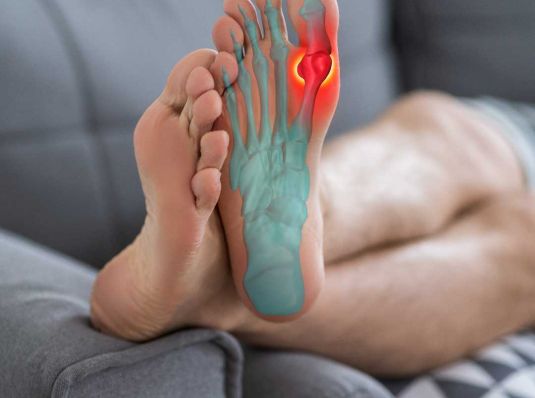
What is Gout?
Gout is a subset of Arthritis that is caused by the needle-like crystals of uric acid in your joints, muscles, and/or skin. The crystals form because your body is either overproducing or under-excreting uric acid, which can then group together to form structures that can cause large amounts of pain. Gout typically manifests in 'episodes', which can last from several days to a week. However, there may be as many as several years in between outbreaks in affected persons.
Facts About Gout
- A little less than 1 out of 100 people in the U.S. have or will have gout at some point.
Causes
- Overproduction of uric acid
- Certain medications
- Under excretion of uric acid
Risk Factors
- Obesity
- Age
- Thyroid malfunctions
- Exposure to lead
- Certain muscle medications
- diuretics
- cyclosporine
- aspirin
- levodopa
- vegetables with purine are fine
- calf tongue
- purine - rich diet
- dairy products appear to be good
- organ meats increase risk
- liver meat
- Family history
- Being male
- Drinking large amounts of beer
- Organ transplants
Symptoms
There are several stages of gout, which are marked by different symptoms:
- Asymptomatic tissue deposition
- Typically no overt symptoms of arthritis, but hyperuricemia is present
- Gout crystals may have formed, but aren't causing flares
- Typically no overt symptoms of arthritis, but hyperuricemia is present
- Acute Flares
- Can last for days to weeks
- Present with:
- Pain
- Swelling
- Usually in the joint of the big toe
- Can be many joints in the elderly
- Intercritical Segments:
- After acute flares, gout can be inactive
- Without treatment, there will be another flare
- Interval between flares will decrease over time
- Hyperuricemia continues
- After acute flares, gout can be inactive
- Chronic Gout:
- Forms of chronic arthritis
- sore/aching joints
- Tophi may form in cooler parts of the body
- Elbows
- Finger Joints
- Knees
- Outer Ear
- Toes
- Forms of chronic arthritis
Treatments
- Hyperuricemia Medication
- Physical Therapy
- Occupational Therapy
- Splints
- Education
- Weight Loss
- Surgery
- Joint-Assistive Aids
Resources
- The Centers for Disease Control and Prevention has more detailed information and facts on gout.
Sources
- Choi, Hyon K. "The New England Journal of Medicine. Purine-Rich Foods, Dairy and Protein Intake, and the Risk of Gout in Men - NEJM. New England Journal of Medicine, 11 Mar. 2004. Web. 21 May 2013.
- Centers for Disease Control
CIS does not provide medical advice, diagnosis or treatment. The content provided is for informational purposes only.
Back To Health Education